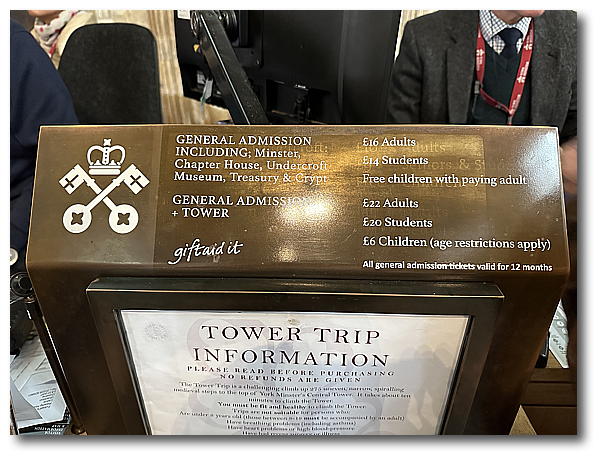
I asked where we could get our free children!
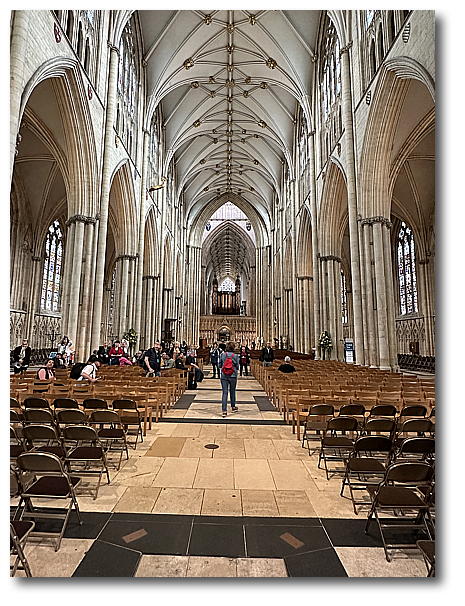
The Nave viewed from the West Door
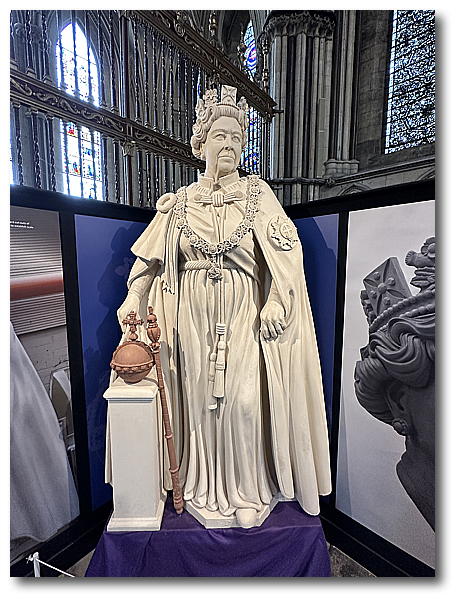
This prototype of the statue of the late Queen Elizabeth is on the western wall of the Minster.
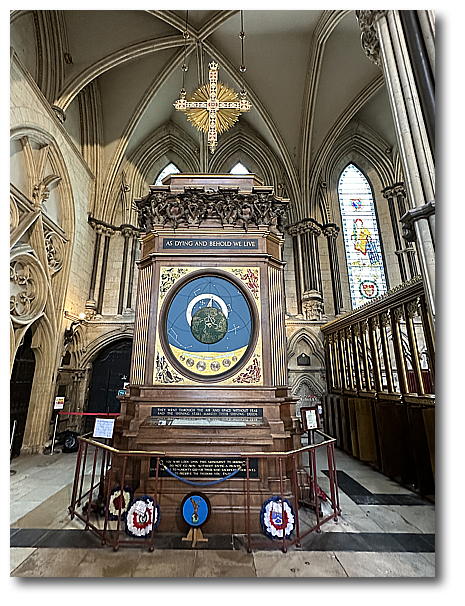
The Astronomical Clock

The Chapter House

Looking up from the centre of the Chapter House


Some of the wonderful carvings in the Chapter House. The one above is of a cat chasing a mouse. The Minster, together with many churches in York, made a deal with Cromwell that they would support him provided he left the Minster and other churches alone. This saved very many precious stained glass windows and other works of art from destruction. Well done,York!

The door to the Chapter House. Can you see the dragon?


The St Nicholas Chapel.

St Nicholas (above the altar in the photo above)


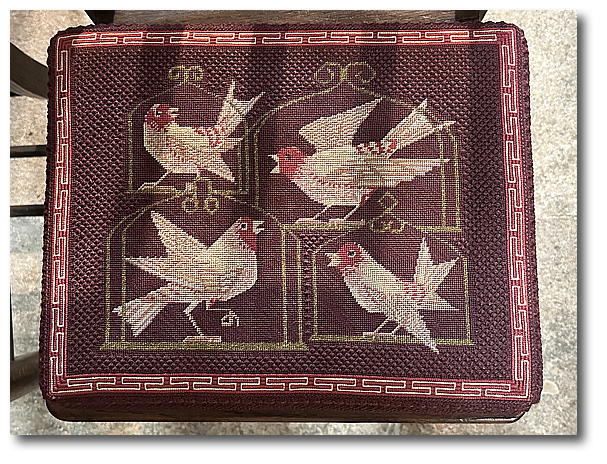


I just had to include all these lovely kneelers. How could I break up the set!?

St Laurence (with the griddle on which he was martyred)

King David

Some of the organ pipes

This memorial reads:
"NEAR THIS MARBLE LIE INTERRED THE REMAINS OF RICHARD WHARTON OF CARLTON IN THE COUNTY OF YORK ESQ, WHO DIED 17TH NOVEMBER 1794, AGED 64 YEARS.
HE WAS A MAN, WHOSE VIRTUES WERE BEST KNOWN TO HIS FRIENDS AND TO THE POOR, FOR HIS LIFE WAS PRIVATE, THO NOT SOLITARY;
HIS PIETY WAS SINCERE, HIS MANNERS AMIABLE, AND HIS BENEVOLENCE TRULY CHRISTIAN."
What a lovely person Richard must have been!

Does this memorial remind you of "Punch and Judy" or is it only me?

A Tale of Two Halves...
The bottom of the font is mid-15th century, it came from Bedern Chapel, York. The cover, designed by Sir Ninian Comper in 1947, commemorates the baptism of King Edwin by Bishop Paulinus in 627 in the first
Saxon cathedral.
The figures from left to right are: Queen Ethelburga, King Edwin, Saint Paulinus, Saint Hilda (Abbess of Whitby) and James the Deacon.
Baptisms in York Minster are still carried out at this font today.

The Doomstone survives from the first Norman Minster. It shows the mouth of Hell a gruesome scene of lost souls slowly pushed into a boiling cauldron by devils and demons. At the top left you can see a man carrying two bags of money, showing the sin of greed. To his right is a woman showing the sin of lust. The stone is also decorated with toads. Thought to be creatures of magic, they were associated with evil and darkness.
It is thought that this formed part of a much larger image on the west front of the 12th century Minster.

The Annunciation
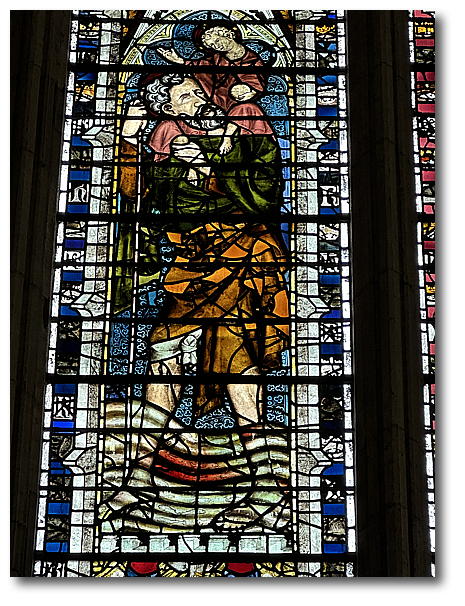
St Christopher carries the child Jesus. According to legend, Saint Christopher devoted his life to carrying the weak and poor across a river. One night, when he was carrying a child, he felt his burden grow heavier with each step. When questioned, the child declared that he was Christ and that Christopher was thus bearing the weight of the world.

St Cuthbert. This and the series of photos following are part of the St Cuthbert Window (c.1440) which is the subject of a conservation project.

This is Bishop Langley who commissioned the window. Sadly, he died in 1439 before it was completed.

While travelling with a companion, St Cuthbert foresaw that an eagle would provide them with food. This panel reveals how the medieval designers rose to the challenge of presenting an unfolding story by selecting its key moments and showing them within one scene. Here, St Cuthbert makes his prediction, while the eagle soars overhead and his companion picks up the fish it has dropped.

The death of St Cuthbert in 687

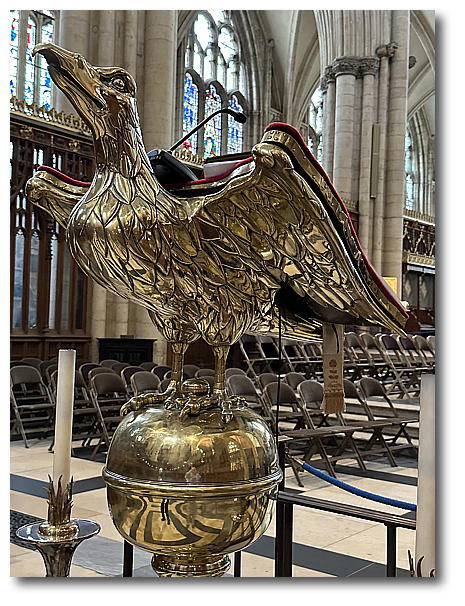
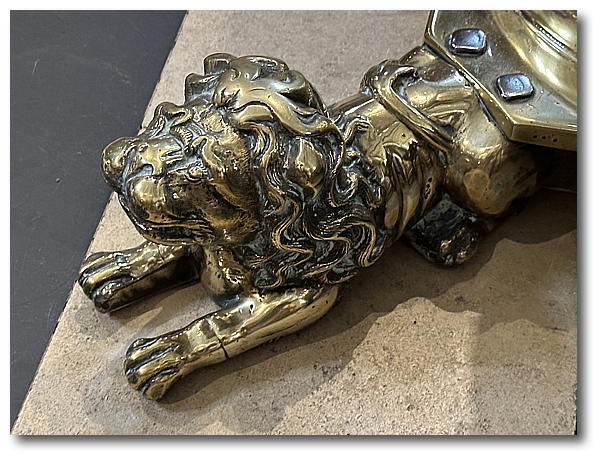
The magnificent lectern, dated 1684, weighs 1.5 tons!

Looking into the Quire from the sanctuary.

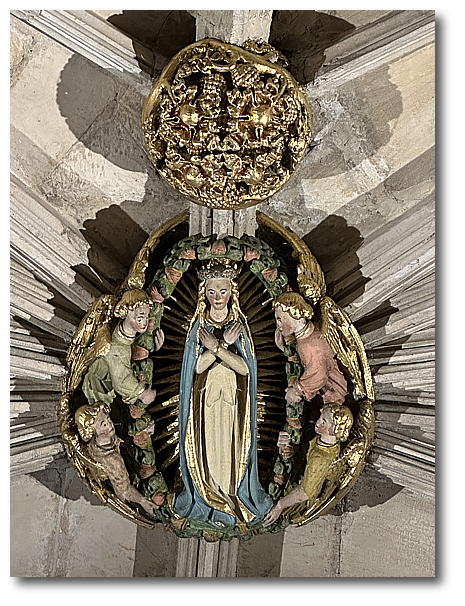
The ceiling

The Organ has recently been restored.

The choir stalls were destroyed in a fire in 1829. They were replaced as near to possible as the originals. What a great job those 19th century carvers did!


Looking up into the central tower
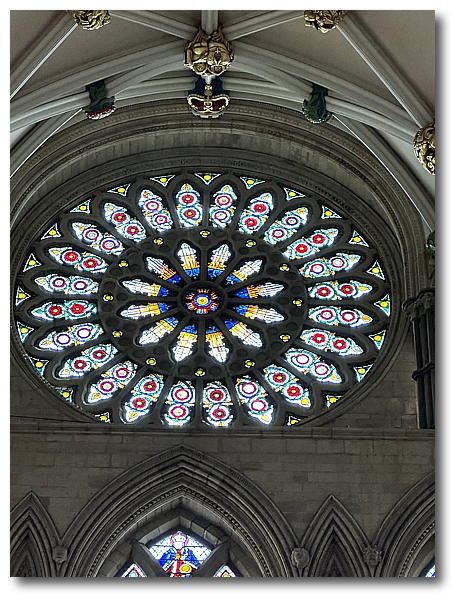
The rose window

In about 1030, a Viking nobleman called Ulf presented this horn as a symbol or record of his gift of lands to the Minster. The horn is carved from an elephant's tusk and is known as an Oliphant. Tradition holds that Ulf filled it with wine, placed it on the Minster's altar, and so dedicated his land to God and to the Minster. This transfer was later confirmed by King Edward the Confessor. Ulf's horn was made in southern Italy, probably in the important trading port of Amalfi, where craftsmen had easy access to ivory.
The animal motifs are designs copied from Syrian and
Babylonian art.

The King's Book of York Heroes, 1920.
The King's Book is a collective memorial and a promise from the city of York to remember the sacrifice made by its citizens during the First World War. Echoing the information found on gravestones, the entries for 1,151 men and two women provide a tangible memorial for those buried far from home.

Casket, 1148.
Believed to be the personal reliquary of St William of York, this casket probably held the heart of a crusader.

The York Gospels
This book is 1,000 years old and describes the life of Jesus. It came to York shortly after it was made and has survived wars, fires and the ravages of time. It is still used in the Minster today - a powerful symbol of continuity.
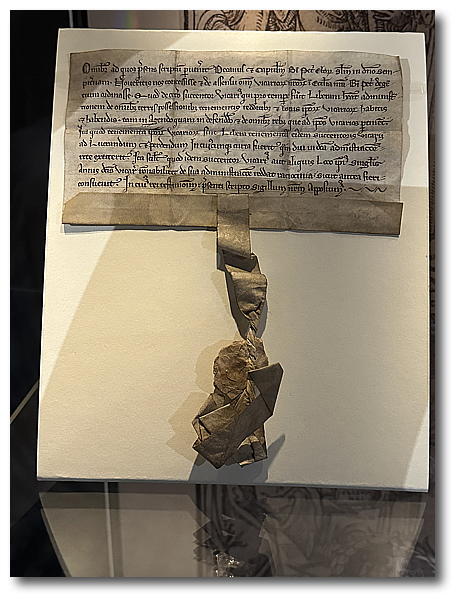
Grant by the Dean and Chapter of York, mid-13th century, giving control of the administration of the lands, possessions and rent income of the Vicars Choral to their office-bearer, the succentor.
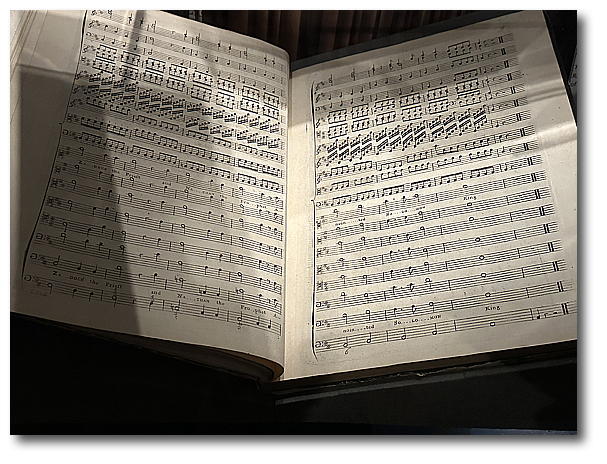
Handel's Celebrated Coronation Anthems in score, for voices and instruments
Printed by J. Walsh, London, 1743
Handel was appointed Composer of Music for His Majesty's Chapel Royal in
1723. He wrote four anthems for the coronation of George Il and his queen Caroline at Westminster Abbey in 1727. These are 'Zadok the Priest', 'Let thy hand be strengthened', 'The King shall rejoice' and 'My heart is inditing'. All four anthems are contained in this volume.
Zadok the Priest is perhaps the best known. It triumphantly proclaims 'God save the King, long live the King ... may the King live for ever'. It has been performed at every British coronation since it was written.
The anthems are based on texts from the King James Bible. Zadok was inspired by the anointing of King Solomon by Zadok the priest and Nathan the prophet in the Book of Kings.
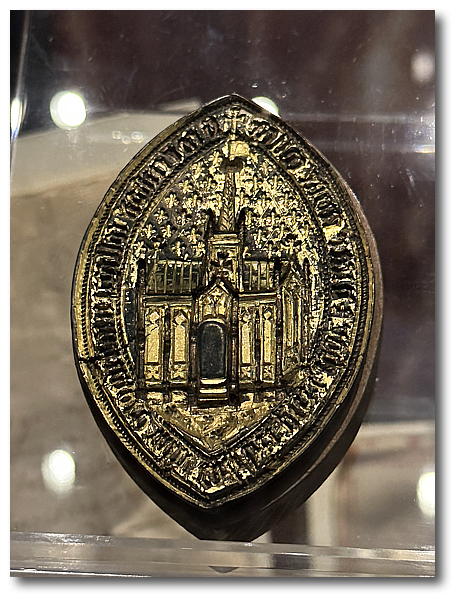
Seal Matrix of the Vicars Choral of York Minster
A matrix is the device used to create a seal. It is pressed into wax that has been softened by heating, and leaves the impression of its design.
This gilded matrix dates from 1421. It was used to make the Common Seal of the Vicars Choral of York Minster, which was attached to documents to authenticate them.
It shows the southern aspect of York Minster.

This lift in the Minster is the only one I have ever been in where the doors are placed like this.

The Nave altar
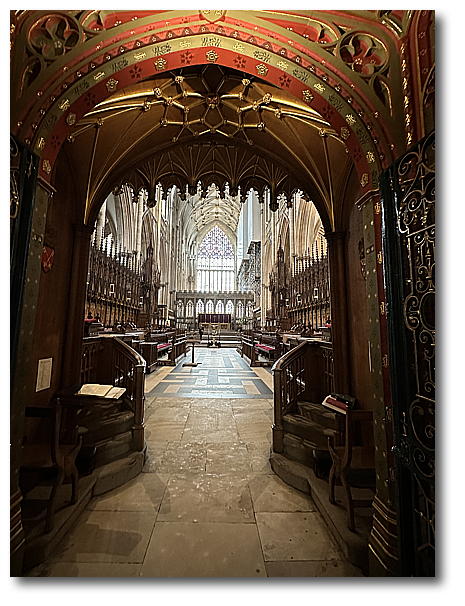
The Quire, looking from the Nave side of the Quire Screen

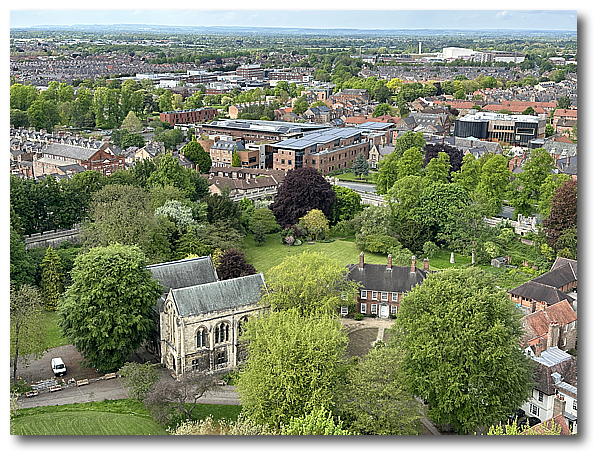
While I was admiring some of the cathedral's treaures above, Satoshi went on a tour to the top of the central tower. This involved climbing 275 medieval steps!


We attended Choral Evensong at 5:30pm. The choir
was made up of boys together with male and female altos, and
men. The music included the responses by Shephard, the canticles
by Murrill in E and the wonderful anthem "God is Gone Up" by
Gerald Finzi. The standard was high but not quite as good as
some of the college choirs in Cambridge.

After Evensong, we went back to Toby Carvery for
dinner, then returned "home" for journal writing (completed at
12:54am!)