

One side of the locomotive "Atlantic Coast Express" has been cut away to allow one to view its interior.

Coppernob, built in 1846, is the last surviving example of a 'bar-framed locomotive in the UK. "Bar-framed" locomotives were designed to be big and powerful but without being heavy.
Designer Edward Bury used a slim frame of iron bars as the structure, instead of heavy timber and iron frames other engineers were using. The design became standard for American-built locomotives.
Coppernob survived a Second World War bombing raid in May 1941 - you can still see the holes. After a working life hauling goods and passengers, the locomotive was retired and put on display in a glasshouse on Barrow-in-Furness station. When the station was bombed, shrapnel destroyed the glass house and punctured the boiler and platework.

A replica of
Stephenson's "Rocket". In 1829. the Liverpool and Manchester
Railway launched a competition to find the best way to haul
carriages and wagons: horses, stationary engines using
cables. or steam locomotives. Rocket won, and the line became the first
intercity main line railway. setting up the steam locomotive
to change the world.

Robert Stephenson


Robert Stephenson
Aerolite (1869) was
the official rail vehicle of the Chief Civil Engineer of
the North Eastern Railway. Senior railway employees wanted
a locomotive at their disposal to help them inspect the
infrastructure of the railways. Pulling a luxury saloon,
Aerolite was used for official visits and inspections, and
to ensure company officials were first on the scene when accidents happened. Aerolite looks nothing like it did when
it was built in 1869.
Over its life, it was rebuilt twice, and gained an extra
pair of wheels in the process. It is not exactly clear why
these changes were made, but as the favourite vehicle of
the Chief Engineer, it was often tinkered with. Aerolite
finished its working life in 1933 and was taken out of
service a week after the Chief Engineer for the north east
retired.

“Livingston Thompson” 1885
Railway engineer Robert Fairlie designed 'double-bogie' engines that helped sell railway technology to the world. In rocky, mountainous areas, railway tracks had to be narrow and tightly curved to suit the terrain. Fairlie's design arranged the wheels on small swivelling frames (known as bogies) instead of one long rigid frame. This meant the locomotive could swing round the curves, while still delivering the power necessary to pull heavy loads. Fairlie sold his design around the world and engines like this one were used from Mexico to Russia and New Zealand to Canada. This Double Fairlie engine was built by the Ffestiniog Railway in North Wales in 1885, and worked until 1971.

Mallard (1938) holds the world speed record for a steam locomotive. On 3 July 1938, it achieved a top speed of 126mph (203 km/ h). Its streamlined design, created by Sir Nigel Gresley, is inspired by the work of automobile designer Ettore Bugatti. Designed as an express passenger locomotive, Mallard is streamlined on the outside and inside - internal streamlining helps steam run more smoothly through the system. increasing its efficiency. In the 1920s and 1930s, the London, Midland and Scottish Railway and the London North Eastern Railway ran competing express routes from London to Scotland. Using fast and elegant locomotives, the rival companies competed for publicity, passengers and speed records. Mallard's speed record has never been beaten by another steam locomotive.
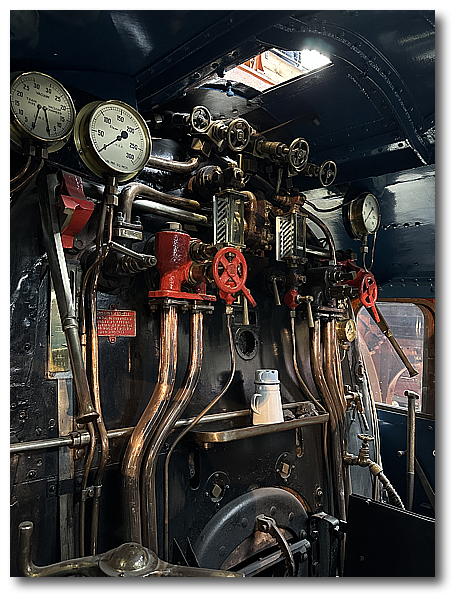
The driver's cab of "Mallard"


This dynamometer car (1906) is the fastest surviving steam-hauled railway carriage in the world. If documented some of the most important record-breaking moments in railway history including the speed record set by Mallard in 1938 and the moment Flying Scotsman hit 100 mph (160 km/h) in 1934.
A vital piece of recording technology, it was used until 1951. The car is a laboratory on wheels, capable of gauging how quickly locomotives used fuel and water, as well as their speed, distance and power. Engineers for the North Eastern Railway, and later the London and North Eastern Railway and British Railways, used this data to help them design and build better, more efficient locomotives.

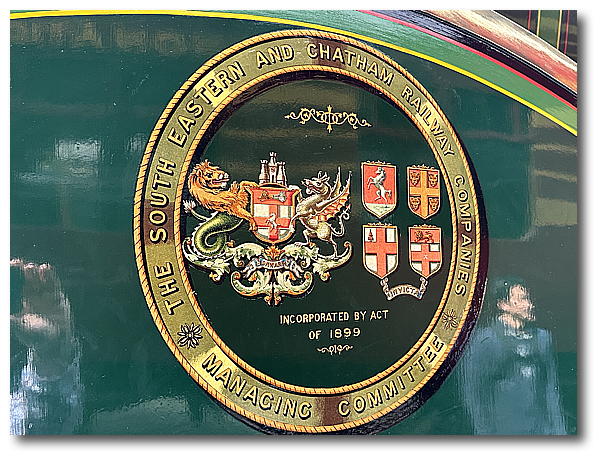
I got a surprise when I saw this on the locomotive above! (I teach at Chatham Primary School.)
D CLASS NO.737, built in 1901.
This elegant locomotive featured in films, transported royalty and started passengers off on glamorous trips to the continent. Design touches, such as the way the wheel arches curve up into the cab, show how it has been moulded by a craftsman's hands.
Built in the early 1900s, the South Eastern and Chatham Railway's D Class locomotives were built to haul passenger trains and ran until the 1950s. The railway travelled to ports like Dover and Folkestone, which linked Britain to France and Belgium and ran special boat trains, which connected directly with ferry services.

In 1981, this locomotive played a starring role in the Oscar-winning film, “Chariots of Fire”.

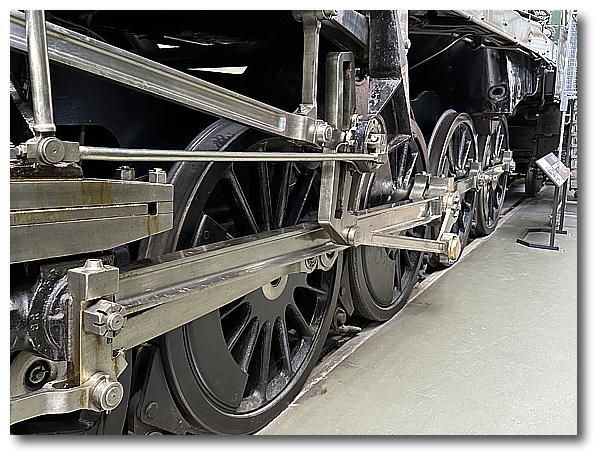

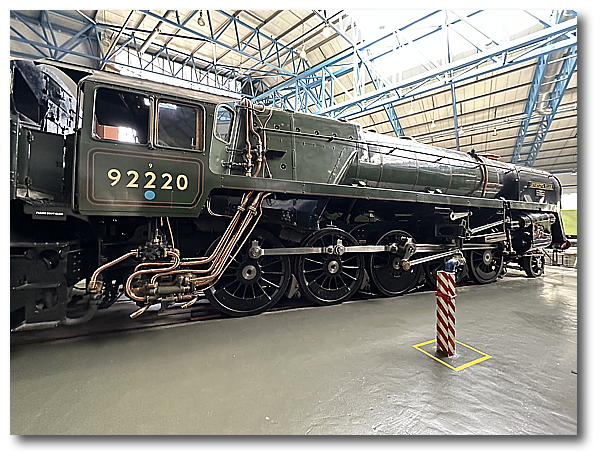
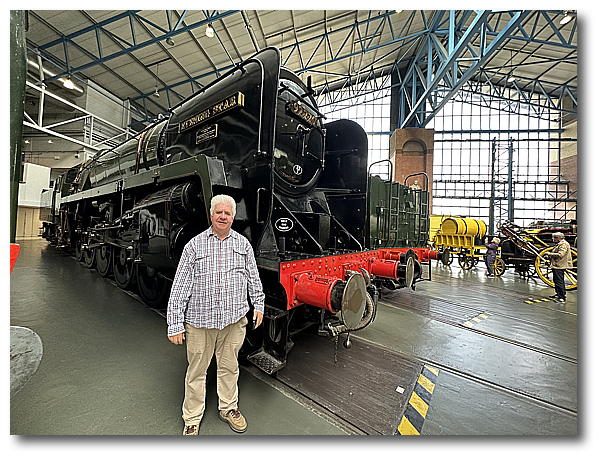
What a fine specimen we have here (and the locomotive - also featured in the four photos above - isn't bad either!). Yes, we both come from 1960!
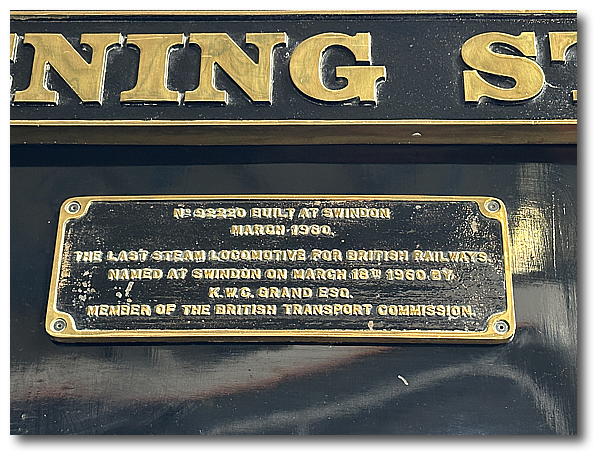
“Evening Star”, built in 1960, was the last steam locomotive ever built for British Railways. Its green paintwork and copper capped chimney deliberately mark it out as a special. commemorative vehicle - all other goods engines built to this design were painted black. It was also the only one to be given a name rather than just a number.
Between 1954 and 1960, 251 of these engines were built, even though British Railways decided to phase out steam power in 1955. Evening Star operated for just five years.
Designed to move heavy loads at fast speeds, these engines are some of the largest and most powerful locomotives ever built in Britain.
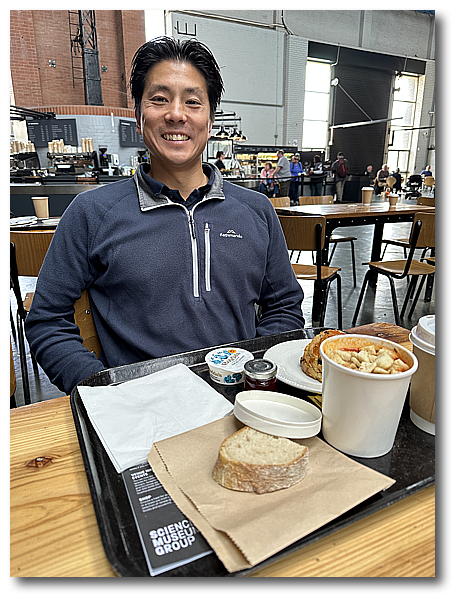

Lunch at the National Railway Museum

Of course we chose this form of transport to take us to York Minster. Please click on the "Forward" button to meet us there!
“Livingston Thompson” 1885
Railway engineer Robert Fairlie designed 'double-bogie' engines that helped sell railway technology to the world. In rocky, mountainous areas, railway tracks had to be narrow and tightly curved to suit the terrain. Fairlie's design arranged the wheels on small swivelling frames (known as bogies) instead of one long rigid frame. This meant the locomotive could swing round the curves, while still delivering the power necessary to pull heavy loads. Fairlie sold his design around the world and engines like this one were used from Mexico to Russia and New Zealand to Canada. This Double Fairlie engine was built by the Ffestiniog Railway in North Wales in 1885, and worked until 1971.
Mallard (1938) holds the world speed record for a steam locomotive. On 3 July 1938, it achieved a top speed of 126mph (203 km/ h). Its streamlined design, created by Sir Nigel Gresley, is inspired by the work of automobile designer Ettore Bugatti. Designed as an express passenger locomotive, Mallard is streamlined on the outside and inside - internal streamlining helps steam run more smoothly through the system. increasing its efficiency. In the 1920s and 1930s, the London, Midland and Scottish Railway and the London North Eastern Railway ran competing express routes from London to Scotland. Using fast and elegant locomotives, the rival companies competed for publicity, passengers and speed records. Mallard's speed record has never been beaten by another steam locomotive.
The driver's cab of "Mallard"
This dynamometer car (1906) is the fastest surviving steam-hauled railway carriage in the world. If documented some of the most important record-breaking moments in railway history including the speed record set by Mallard in 1938 and the moment Flying Scotsman hit 100 mph (160 km/h) in 1934.
A vital piece of recording technology, it was used until 1951. The car is a laboratory on wheels, capable of gauging how quickly locomotives used fuel and water, as well as their speed, distance and power. Engineers for the North Eastern Railway, and later the London and North Eastern Railway and British Railways, used this data to help them design and build better, more efficient locomotives.
I got a surprise when I saw this on the locomotive above! (I teach at Chatham Primary School.)
D CLASS NO.737, built in 1901.
This elegant locomotive featured in films, transported royalty and started passengers off on glamorous trips to the continent. Design touches, such as the way the wheel arches curve up into the cab, show how it has been moulded by a craftsman's hands.
Built in the early 1900s, the South Eastern and Chatham Railway's D Class locomotives were built to haul passenger trains and ran until the 1950s. The railway travelled to ports like Dover and Folkestone, which linked Britain to France and Belgium and ran special boat trains, which connected directly with ferry services.
In 1981, this locomotive played a starring role in the Oscar-winning film, “Chariots of Fire”.
What a fine specimen we have here (and the locomotive - also featured in the four photos above - isn't bad either!). Yes, we both come from 1960!
“Evening Star”, built in 1960, was the last steam locomotive ever built for British Railways. Its green paintwork and copper capped chimney deliberately mark it out as a special. commemorative vehicle - all other goods engines built to this design were painted black. It was also the only one to be given a name rather than just a number.
Between 1954 and 1960, 251 of these engines were built, even though British Railways decided to phase out steam power in 1955. Evening Star operated for just five years.
Designed to move heavy loads at fast speeds, these engines are some of the largest and most powerful locomotives ever built in Britain.
Lunch at the National Railway Museum
Of course we chose this form of transport to take us to York Minster. Please click on the "Forward" button to meet us there!