


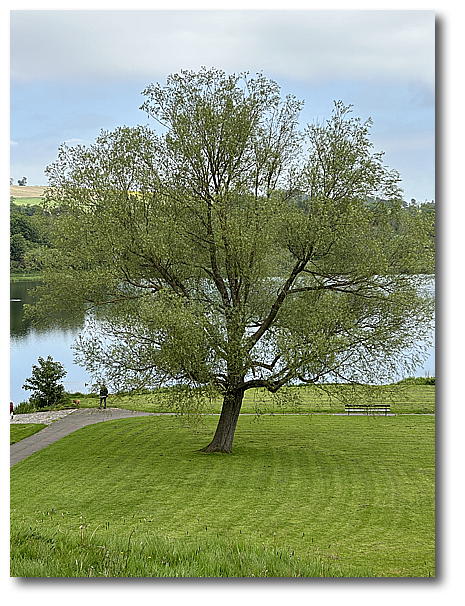
The size of this tree can be appreciated by comparing it with the person on the left of the photo.


The park near the palace is called a peel and the water a loch. It was very peaceful there. The water had hardly a ripple on its surface.
Our next stop was Blackness Castle. It has been used as a prison and a garrison. I actually found it quite bleak and depressing.


The central tower was originally built as a house for Sir George Crichton in the 1400s.

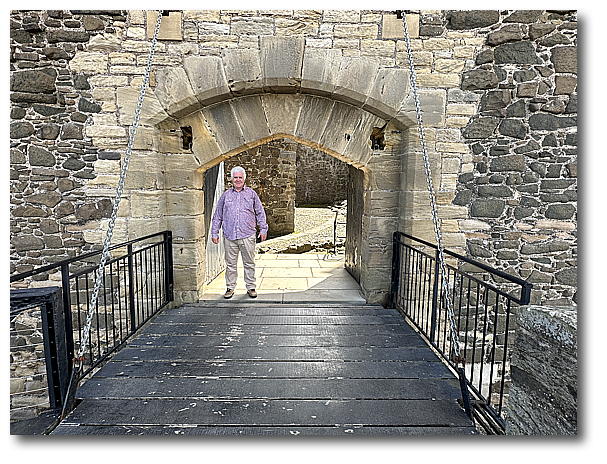

The cast-iron pier was constructed in 1868, with a gate and a drawbridge, one of the last to be built in Britain.


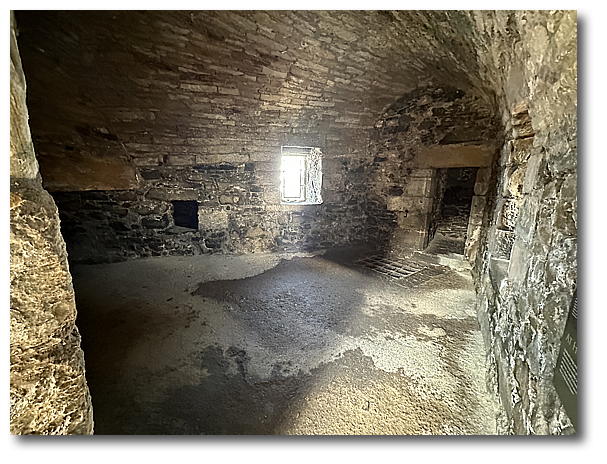

Another view of the Central Tower. It is sometimes called "The Ship that Never Sailed".

This room originally had another floor halfway up.


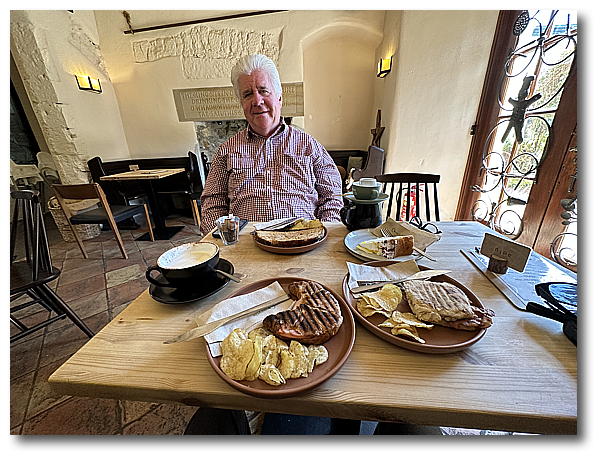
From Blackness Castle, we travelled to Dunfermline Abbey and had lunch at the Abbot's House (part of the abbey).

Sadly, much of the abbey is closed to the public
but, as was the case at Linlithgow, most of the abbey church is
still in use. So our visit started there.
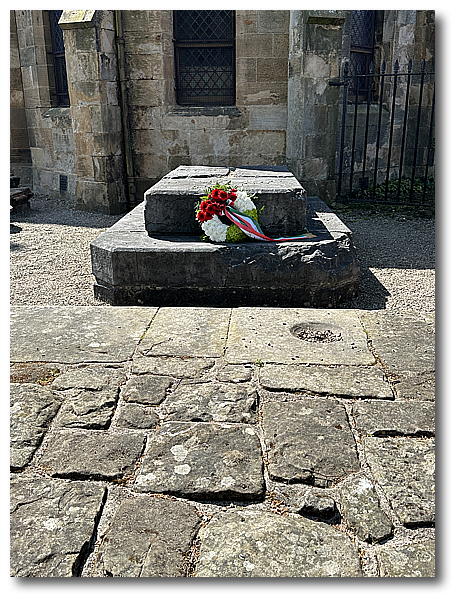
This is all that remains of the shrine of St Margaret. It used to be inside the church but the "new" church, constructed in the early 1800s, was a little shorter than the old one. Margaret died in Edinburgh Castle in 1093 after learning of her husband, King Malcolm's death in battle. Both were buried in the abbey. Alter her death, pilgrims visited Margaret's tomb in the abbey to pray - and pay - for cures from sickness. Many miracles of healing were recorded and, in 1249, Pope Innocent IV made her a saint. Her remains - and Malcolm's - were moved a year later to a new chapel built here. Her highly decorated wooden casket rested on these blocks of stone.They are carved from County Durham's fossil-rich Frosterley 'marble'.

This doorway is so well preserved because it was hidden behind some stonework done 300 years ago.

This is the nave of the original abbey church which was consecrated in 1147.

Jesus prays in the Garden of Gethsemane, watched over by an angel, while the disciples sleep.

This artwork remains from the 12th century.

St Peter


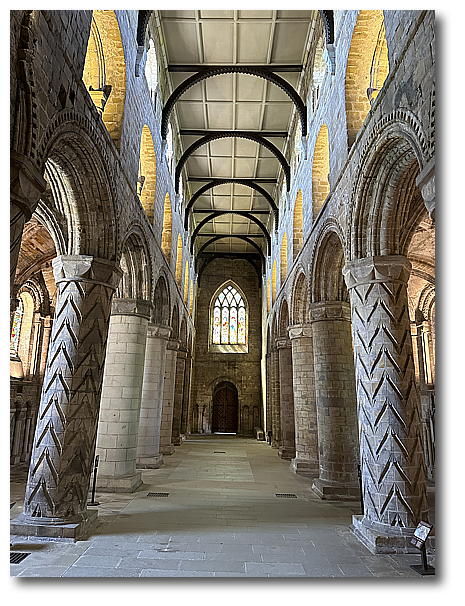
The nave, looking from the east.
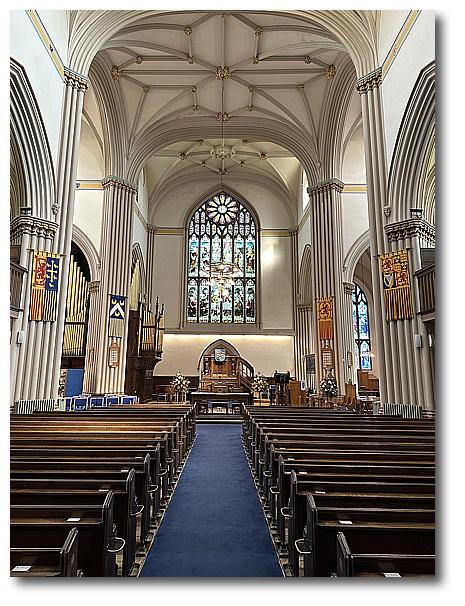
In the early 1800s, the remains of the Quire and chancel from the abbey church were demolished and a new church was built. This is the Church of Scotland parish church.
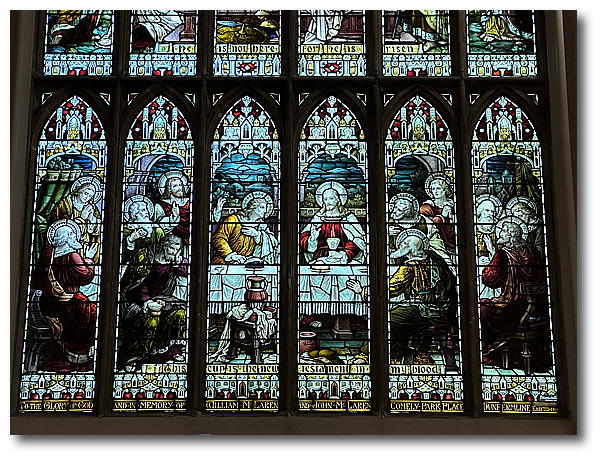
The Last Supper (part of the east window)

"He is not here for he has risen."

Faith, Charity and Hope
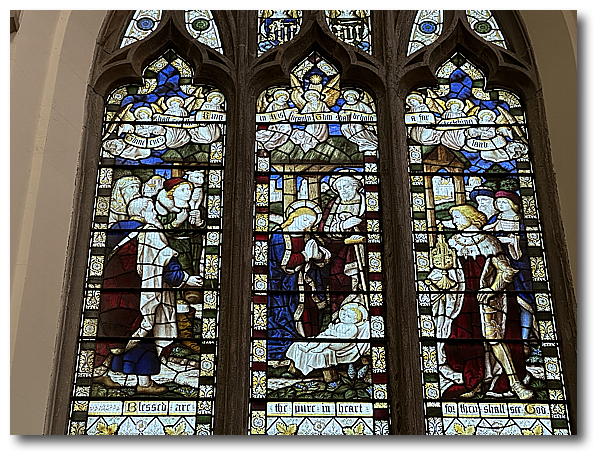
"Blessed are the pure in heart for they shall see God"

These tokens were found during excavations. They were given to people deemed worthy to receive Communion. Only those with a token were given access.

The organ console


The Pulpit

The tomb of Robert the Bruce is under the pulpit.

Each of the four evangelists is depicted on the pulpit, each with his symbol. This is St Matthew.


St John, with his symbol below


St Luke, with his ox below

St Mark, with his lion below


The Lectern


Detail of lectern

Now, the question is, "Why doesn't this eagle have a halo like his friend?" Has it fallen off or perhaps he was not as well-behaved?


The "Tiffany" window was donated by Andrew Carnegie (of Carnegie Hall fame) who was born in Dunfermline. It was not installed in the church until 2019.

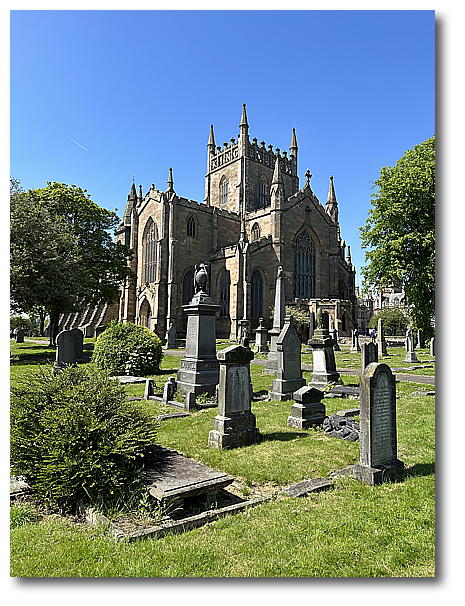
This photo, and the two below, clearly show the difference between the 12th century nave on the left and the 19th century church on the right.


The refectory would have been on the floor above the ground.


This is an Annunciation Stone. It was once the roof of a window in the abbey's guest house (which later became a residence of royalty). Mary reads from a lectern: 'Behold the handmaid of the Lord; be it unto me according to thy Word'. Gabriel holds a scroll of text: 'Hail thou that is highly favoured, the Lord is with thee'.


These walls are all that is left of the domestic buildings of the abbey.

This is the remains of the gatehouse.
This is all that remains of the shrine of St Margaret. It used to be inside the church but the "new" church, constructed in the early 1800s, was a little shorter than the old one. Margaret died in Edinburgh Castle in 1093 after learning of her husband, King Malcolm's death in battle. Both were buried in the abbey. Alter her death, pilgrims visited Margaret's tomb in the abbey to pray - and pay - for cures from sickness. Many miracles of healing were recorded and, in 1249, Pope Innocent IV made her a saint. Her remains - and Malcolm's - were moved a year later to a new chapel built here. Her highly decorated wooden casket rested on these blocks of stone.They are carved from County Durham's fossil-rich Frosterley 'marble'.
This doorway is so well preserved because it was hidden behind some stonework done 300 years ago.
This is the nave of the original abbey church which was consecrated in 1147.
Jesus prays in the Garden of Gethsemane, watched over by an angel, while the disciples sleep.
This artwork remains from the 12th century.
St Peter
The nave, looking from the east.
In the early 1800s, the remains of the Quire and chancel from the abbey church were demolished and a new church was built. This is the Church of Scotland parish church.
The Last Supper (part of the east window)
"He is not here for he has risen."
Faith, Charity and Hope
"Blessed are the pure in heart for they shall see God"
These tokens were found during excavations. They were given to people deemed worthy to receive Communion. Only those with a token were given access.
The organ console
The Pulpit
The tomb of Robert the Bruce is under the pulpit.
Each of the four evangelists is depicted on the pulpit, each with his symbol. This is St Matthew.
St John, with his symbol below
St Luke, with his ox below
St Mark, with his lion below
The Lectern
Detail of lectern
Now, the question is, "Why doesn't this eagle have a halo like his friend?" Has it fallen off or perhaps he was not as well-behaved?
The "Tiffany" window was donated by Andrew Carnegie (of Carnegie Hall fame) who was born in Dunfermline. It was not installed in the church until 2019.
This photo, and the two below, clearly show the difference between the 12th century nave on the left and the 19th century church on the right.
The refectory would have been on the floor above the ground.
This is an Annunciation Stone. It was once the roof of a window in the abbey's guest house (which later became a residence of royalty). Mary reads from a lectern: 'Behold the handmaid of the Lord; be it unto me according to thy Word'. Gabriel holds a scroll of text: 'Hail thou that is highly favoured, the Lord is with thee'.
These walls are all that is left of the domestic buildings of the abbey.
This is the remains of the gatehouse.
Our final visit for the day was to Culross Abbey.
Once again, we knew that access would be restricted but we
gave it a try anyway. As it was, we arrived so late in the
day that, even had it been open, it would have been closed
anyway!

The approach to Culross was down a very narrow street, so narrow in fact, that we wondered if "Siri" had made (another) mistake!

The town is by the coast and is very quiet and peaceful. The railway was closed to passengers in 1930 and to freight only relatively recently. It is hoped to reopen the line for passengers.
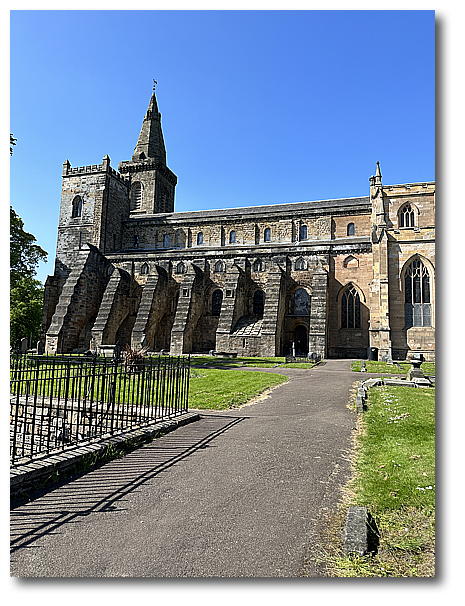
We found that, as was the case in Dunfermline, the abbey church had been retained as the Parish Church. This too, was closed as it was past 5:00pm by this stage.

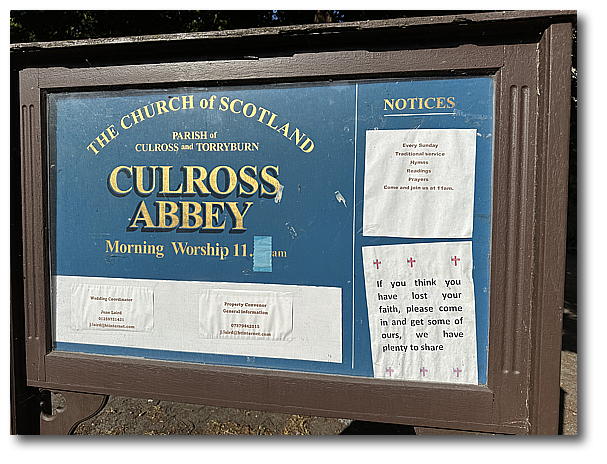
I enjoyed this notice, which I thought was very clever!
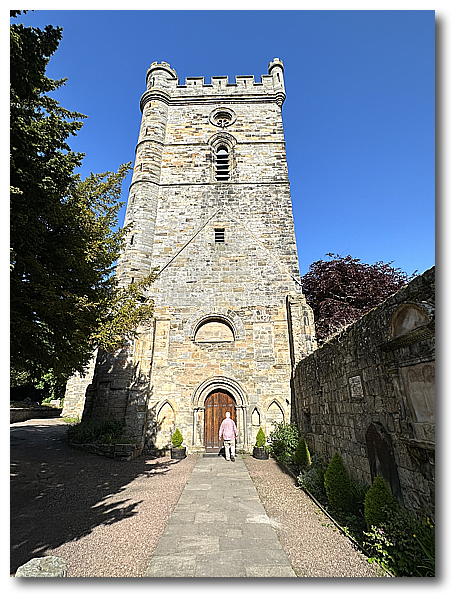
I had to check, just in case, but the appearance of "closedness" was correct.
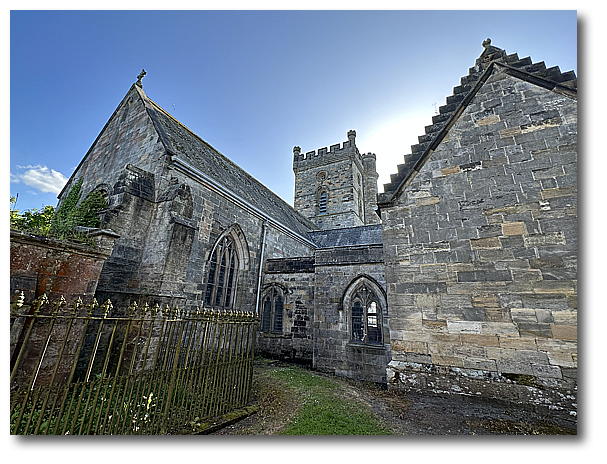
We walked around the church to see if we could glimpse part of the ruins, but all we found was more church!
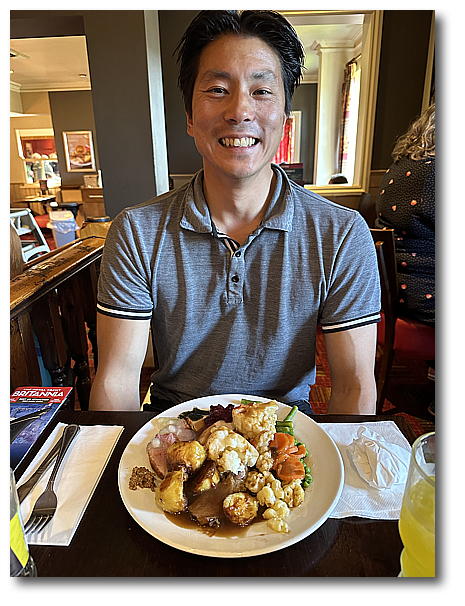
We returned to our accommodation via Toby Carvery in Bathgate for dinner. Very nice it was too!

The approach to Culross was down a very narrow street, so narrow in fact, that we wondered if "Siri" had made (another) mistake!
The town is by the coast and is very quiet and peaceful. The railway was closed to passengers in 1930 and to freight only relatively recently. It is hoped to reopen the line for passengers.
We found that, as was the case in Dunfermline, the abbey church had been retained as the Parish Church. This too, was closed as it was past 5:00pm by this stage.
I enjoyed this notice, which I thought was very clever!
I had to check, just in case, but the appearance of "closedness" was correct.
We walked around the church to see if we could glimpse part of the ruins, but all we found was more church!
We returned to our accommodation via Toby Carvery in Bathgate for dinner. Very nice it was too!